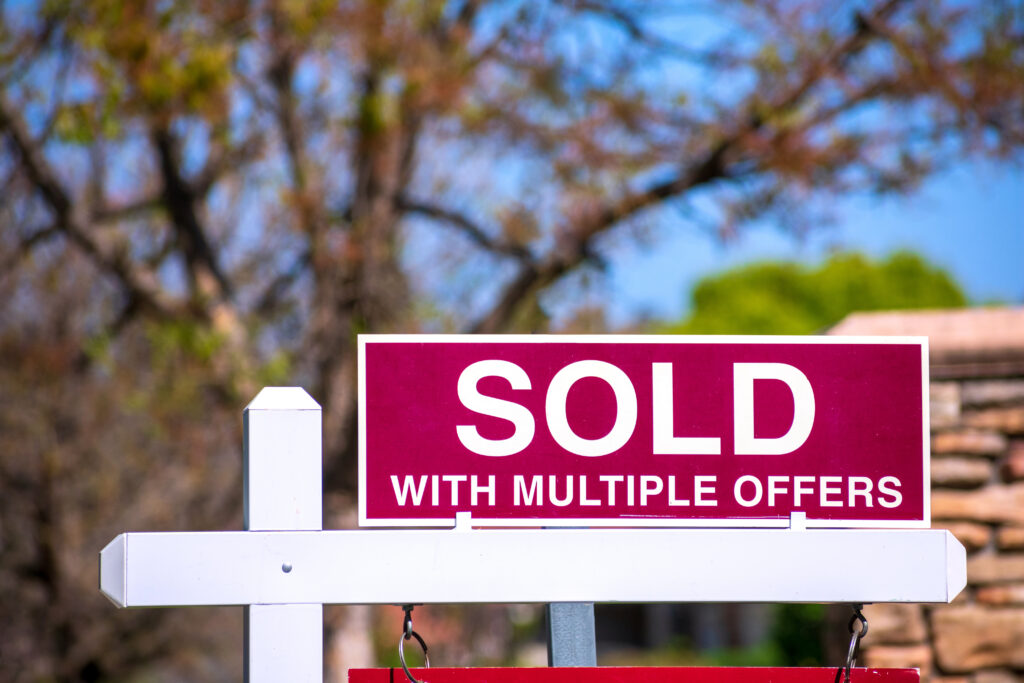
Multiple offer situations still happen in Central Florida, even in a more balanced market. Certain price points, certain neighborhoods, and well-prepared homes that are priced correctly will attract competing buyers. When they do, how your offer is structured — not just what it says on the price line — determines whether you win or lose.
This covers the buyer side and the seller side, because both have strategic decisions to make when multiple offers are on the table.
Pre-approval is table stakes. What separates offers in a multiple-offer situation is the quality of the pre-approval. A letter from a local or regional lender who answers the phone and has a reputation for closing on time carries more weight than one from a national online lender. Listing agents talk to each other, and a buyer’s agent who says “my buyer is pre-approved with [known, reliable local lender]” is telling the seller something meaningful. If your lender doesn’t know the Florida market and can’t be reached on a Saturday, consider shopping elsewhere before you start making offers.
Price matters, but it’s rarely the only variable. Sellers weigh the full offer package. Before you submit anything, your agent should find out what the seller’s situation is — do they need a fast close? Do they need time after closing to move? Are they already under contract on another home and worried about timing? Do they have a specific concern about the transaction falling through?
A seller who needs to close in 21 days may prefer a cash offer at $5,000 less over a financed offer at full price. A seller who needs 45 days to move may accept a slightly lower price in exchange for a flexible closing date. Knowing what the seller actually needs — and structuring your offer to meet those needs — is often more effective than simply throwing money at the price.
An escalation clause is an addendum that says you’ll beat the next highest offer by a specified amount, up to a cap. Example: “Buyer will pay $2,000 above the highest competing offer, not to exceed $440,000.” This can be effective in a genuine bidding war because it ensures you don’t leave money on the table unnecessarily — you only pay what you need to pay to win.
The downsides: it reveals your ceiling to the seller, and not all sellers or listing agents like them. Some prefer a clean best-and-final. Before including an escalation clause, your agent should assess whether it’s appropriate for this particular listing and seller. Used correctly it can be a strong tool. Used carelessly it can appear unsophisticated.
In a multiple-offer situation, a larger earnest money deposit is one of the highest signal-to-cost moves a buyer can make. Going from 1% to 3% on a $400,000 home is $8,000 more at risk — but if you actually intend to close and you’re using your inspection period appropriately, your deposit is protected. To a seller weighing competing offers, a buyer who puts up $12,000 versus $4,000 signals meaningfully different commitment levels. Use this.
An appraisal gap clause tells the seller you’ll cover some or all of the difference between the appraised value and the contract price in cash, up to a specified amount. This matters when you’re offering above asking price and there’s real risk the home won’t appraise at the contract price.
Only include a gap clause for an amount you actually have available in cash reserves and are genuinely comfortable putting at risk. A gap clause you can’t fund creates a bigger problem than not including one at all. If your offer is at or near asking price in a market with solid comparable sales, you may not need it — discuss with your agent whether the appraisal risk is real before you commit to gap coverage.
Waiving the inspection contingency entirely to win a multiple-offer situation is a risk I’d rarely recommend. The inspection period is one of the most important protections a buyer has, and discovering a major issue after closing with no recourse is a bad position to be in.
Shortening it is a different story. A 5-day inspection period instead of 10 is meaningful to a seller without eliminating your protection. Have your inspector on standby before submitting the offer so you can move immediately. If you can get in same-day or next-day, a 5-day window is very manageable.
If your offer doesn’t get accepted, ask your agent to submit a backup offer in writing. Deals fall through — financing falls apart, inspections reveal deal-breakers, buyers get cold feet. A written backup offer positions you to step in immediately if the primary deal fails. Sellers who accepted an offer they weren’t fully confident in will sometimes reach out to the backup buyer before even putting the home back on the market. This happens more than people realize.
Every offer looks different when you build out the full net picture. A $450,000 offer with the buyer asking you to cover $10,000 in closing costs, with a 30-day close, from a buyer pre-approved with a lender you’ve never heard of, is not the same as a $445,000 clean offer with 21-day close from a cash buyer. Your agent should prepare a side-by-side comparison of every offer showing estimated net proceeds, financing risk, timeline, and contingencies — not just list price.
When you receive multiple offers, you have two main approaches: issue a “highest and best” deadline to all buyers simultaneously, asking each to submit their strongest offer by a specific time — or counter one or two of the strongest offers directly without going back to everyone.
Highest and best is cleaner and creates urgency. Selective countering gives you more flexibility but is more complex to manage. The right approach depends on the spread between offers, your confidence in the leading offer, and how much upside you think is left to extract. Your agent should walk you through both options and help you decide.
A higher offer from a buyer with a shaky financing situation isn’t necessarily better than a lower offer from a solidly qualified buyer. Ask your agent to call the buyers’ loan officers directly and ask pointed questions: Is this a fully underwritten approval or a soft pre-qual? What’s the buyer’s loan-to-value? Any concerns about the file?
A deal that falls apart at financing after 30 days costs you time, momentum, and market positioning. A home that went under contract and came back on the market carries stigma that affects future offers.
Multiple offers feel like leverage — and they are. But pushing too hard for maximum price at the expense of deal certainty can backfire. An offer at $445,000 that closes cleanly is worth more than an offer at $455,000 with an aggressive buyer and a lender who can’t perform. The appraisal risk on a high offer is also real — if it comes in low and the buyer can’t cover the gap, you’re either renegotiating or relisting. Think about the full picture before you push every offer to their absolute ceiling.
Central Florida in 2025 is a more balanced market than the 2021-2022 environment when multiple offers were nearly universal. Inventory is up, homes are sitting longer, and buyers have more options. That doesn’t mean multiple-offer situations don’t happen — they absolutely do, on the right homes at the right prices — but the frequency has decreased and the intensity has moderated.
What tends to attract multiple offers in today’s Central Florida market: well-priced homes in Seminole County school districts, anything in Lake Mary or Oviedo priced at or below the median, newer construction in growth corridors, and homes in strong walkable areas of Winter Park or downtown-adjacent Orlando neighborhoods.
If you’re a buyer who encounters a multiple-offer situation on a home you want, the tactics above apply. If you’re a seller who isn’t seeing multiple offers, the more likely issue is price or presentation — not market conditions. A good CMA and a pre-listing consultation can usually identify which one.
In a multiple-offer situation as a buyer or a seller and want to talk through your options? Reach out. This is exactly where having the right agent in your corner matters most.




Leave a Reply